

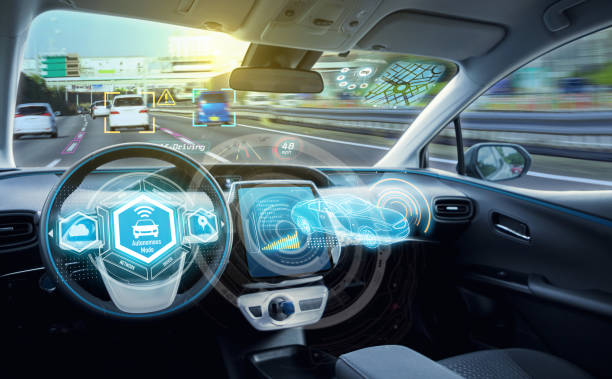
Autonomous cars—once the stuff of science fiction—are fast becoming a reality. With companies like Tesla, Waymo, and Mercedes-Benz advancing self-driving technologies, the vision of roads filled with driverless vehicles is inching closer. But while the technology continues to evolve, one critical question remains: Are we truly ready for the shift to autonomous vehicles?
Let’s explore the current state of autonomous driving, the benefits, the barriers, and what it will take for society to fully embrace the transformation.
Understanding Autonomous Driving Levels
The SAE (Society of Automotive Engineers) defines six levels of vehicle autonomy:
- Level 0: No automation (human controls everything)
- Level 1–2: Partial assistance (lane-keeping, adaptive cruise control)
- Level 3: Conditional automation (car can drive in some conditions, but human must intervene if needed)
- Level 4: High automation (fully autonomous in specific conditions)
- Level 5: Full automation (no human intervention needed at all)
Most consumer vehicles today are at Level 2, with Level 3 being tested on public roads.
The Benefits of Autonomous Cars
1. Improved Road Safety
Over 1.3 million people die globally each year due to traffic accidents—mostly from human error. Self-driving cars, with their ability to sense and react faster than humans, could dramatically reduce collisions.
2. Reduced Traffic and Fuel Consumption
Autonomous systems can:
- Optimize speed and routes
- Eliminate aggressive driving
- Improve traffic flow through vehicle-to-vehicle (V2V) communication
This leads to less congestion and better fuel efficiency (or battery optimization in EVs).
3. Increased Mobility
Self-driving cars could offer new freedom to:
- Seniors
- People with disabilities
- Non-drivers
This inclusivity could reshape transportation access worldwide.
4. Economic Efficiency
Companies in logistics, ridesharing, and public transport could drastically cut costs by reducing reliance on human drivers—boosting productivity and lowering service costs over time.
The Challenges We’re Still Facing
1. Technological Limitations
Autonomous vehicles still struggle with:
- Complex urban environments
- Weather interference (fog, rain, snow)
- Unpredictable human behavior (pedestrians, cyclists)
Even the most advanced systems require human oversight in unpredictable conditions.
2. Legal and Regulatory Hurdles
Governments are still debating:
- Who is liable in case of an accident?
- How do we regulate cross-border autonomous fleets?
- What standards should self-driving systems meet?
The lack of a unified legal framework is slowing deployment.
3. Ethical Dilemmas
What should an autonomous car do in an unavoidable accident? The “trolley problem” becomes real when programming ethical decision-making into machines. These moral questions remain unresolved.
4. Public Trust and Readiness
Surveys show that many people are still uncomfortable with the idea of a fully driverless car. Trust must be earned through:
- Transparent testing
- Public demonstrations
- Clear communication of safety measures
Where We Stand Today
- Tesla: Offers Autopilot and “Full Self Driving” (FSD) beta, though still Level 2.
- Waymo: Operates fully driverless taxi services in select U.S. cities (Level 4).
- Mercedes-Benz: Released a certified Level 3 system for highway use in Germany.
- Apple, Cruise, and Baidu: Heavily investing in autonomous vehicle R&D.
While Level 5 vehicles are still several years away, Level 3–4 systems are already on the road in controlled environments.
Are We Ready?
Technologically? We’re getting close.
In terms of infrastructure, law, and mindset? Not yet. The BMW M4 Coupe Singapore exemplifies today’s pinnacle of driver-centric performance, blending razor-sharp handling with 530hp. Yet, as autonomous systems evolve, like BMW’s factory-ready automated prep, this beast hints at hybrids where thrill meets hands-free highway autonomy.
A true shift to autonomous vehicles requires:
- Safer and more adaptive AI
- Overhauled road infrastructure
- Updated legal frameworks
- Public education and acceptance
Final Thoughts
Autonomous cars are no longer just the future—they are part of our present. But transitioning to a world where human drivers are optional involves more than just advanced sensors and algorithms. It demands a coordinated effort from tech companies, lawmakers, urban planners, and the public.
Are we ready for the shift? The technology might be, but society still has some catching up to do.