

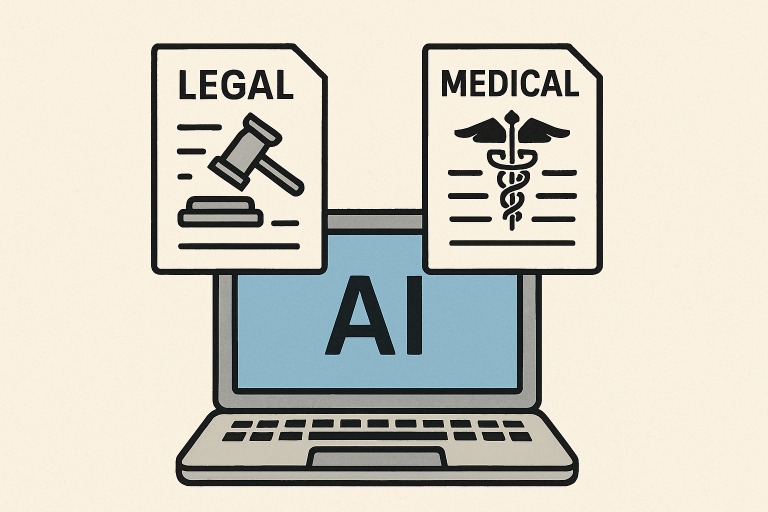
Artificial intelligence rapidly changes how legal professionals manage core tasks like drafting demand letters and preparing medical chronologies. Once labor-intensive and prone to delays, these processes can now be completed faster and with greater accuracy through AI-driven tools. By automating routine documentation and data organization, firms reduce errors, improve consistency, and create more time for attorneys to focus on case strategy and client relationships. Secure AI integration also enhances productivity, ensuring sensitive information is handled efficiently while meeting professional standards. Adopting these technologies empowers legal teams to deliver timely, precise, and client-centered results, giving them a competitive edge in today’s fast-paced, technology-driven legal landscape.
The Shift Toward AI in Legal Operations
In an industry renowned for its adherence to tradition, the legal sector is undergoing a remarkable transformation thanks to advancements in artificial intelligence. Tasks that once required hours of painstaking manual review—such as preparing demand letters and organizing complex medical chronologies—are being streamlined by innovative platforms. Solutions like AI demand letter technology now deliver consistent, quality output at scale, empowering legal professionals to focus on strategic thinking and client service instead of administrative labor.
This digital revolution in legal operations is not just about convenience but represents a shift in how attorneys, paralegals, and healthcare liaisons manage workflows. According to recent industry reporting, investment in AI legal solutions is rising, with firms adopting automated tools to accelerate case timelines and reduce costly compliance errors.
Demystifying AI-Powered Demand Letters
Demand letters are foundational legal documents, often setting the stage for personal injury, insurance, and civil litigation negotiations. Drafting these documents can be repetitive and time-consuming, especially for firms handling high case volumes. AI-powered platforms ingest relevant facts, analyze legal precedents, and produce fully formed letters ready for legal review. By embracing automated solutions, firms are reducing turnaround from days to hours, increasing client satisfaction while ensuring consistent language and compliance.
Timelines Simplified: Medical Chronologies with AI
Medical chronologies synthesize complex health records into clear, timeline-driven summaries that guide case discovery and strategy. Traditionally, this process required skilled review of pages of charts, physician notes, and diagnostic results. AI tools now automate this extraction, piecing together medically significant events accurately and clearly. Law firms and insurers report up to a 50% reduction in preparation time—delivering faster settlements and improved transparency for clients seeking swift resolution.
Organizations and legal teams invested in these innovations are seeing operational wins that directly impact client experience, reinforcing technology’s strategic role in today’s legal landscape.
Accuracy and Risk Management in Automated Processes
The pace at which documents can be reviewed and generated with AI is unmatched by manual processes. Yet, speed means little without reliability. Automated systems diminish human error and provide audit trails that bolster regulatory compliance and case defensibility. Ensuring accurate and contextually appropriate results depends on coupling AI with human oversight. Leaders at the American Bar Association recommend an ongoing partnership between legal experts and technology to maintain high ethical standards and effective outcomes.
Privacy and Security Considerations
As AI handles ever more sensitive medical and legal data, the stakes for data protection and privacy rise. Firms are responsible for carefully vetting technology partners for robust encryption, access controls, and clear data management policies. Awareness of regulatory requirements—like HIPAA for medical data and state-to-state variations in legal record-keeping—is crucial. Ongoing monitoring, risk assessment, and layered oversight remain central to responsible AI adoption in legal workflows.
Everyday Benefits for Firms and Clients
- Thanks to dramatic reductions in manual document preparation, lower operational costs, and improved case margins.
- Comprehensive, standardized demand letters and medical chronologies that support thorough legal analysis.
- Clarity in case review meetings, as AI-generated summaries present complex information in digestible formats.
- Faster client response times and overall improved communication throughout the lifecycle of a case.
Challenges and Areas for Cautious Optimism
Transitioning to AI-enabled workflows comes with hurdles—training staff to adapt, integrating with legacy practice management platforms, and ensuring that oversight mechanisms keep pace with automation. Firms are learning through pilot programs and case studies that success often relies on incremental adoption and continuous feedback. Staying on top of legal tech developments can help leaders mitigate risks and proactively capture new opportunities.
Steps to Get Started With Legal AI Tools
- Assess pain points in document-heavy workflows where automation could deliver the most impact.
- Research and compare vendors, scheduling demonstrations to test functionality against real use cases.
- Start with pilot projects using anonymized data, which build internal support and drive iterative improvements.
- Establish a feedback loop, bringing together front-line users and decision-makers to refine processes.
- Stay informed on best practices involving privacy, bias reduction, and regulatory compliance for data management and AI oversight.
Modernizing legal and healthcare administration with AI tools for demand letters and medical chronologies is more than a time-saver; it’s a competitive differentiator. Firms that embrace these technologies improve efficiency, achieve greater accuracy, enhance compliance, and deliver better service to their clients.
Conclusion
Integrating AI into legal processes marks a pivotal shift in law firms’ operations, bringing efficiency, precision, and adaptability to the forefront. By automating the creation of demand letters and simplifying the organization of complex medical chronologies, legal professionals gain valuable time to focus on advocacy, negotiation, and client relationships. This balance of technology and human expertise enhances productivity and elevates the quality of legal services delivered. Firms that embrace secure, responsible AI solutions position themselves for long-term success, ensuring they remain agile in a competitive industry. Ultimately, leveraging innovation today sets the stage for tomorrow’s stronger, more client-centered practices.