

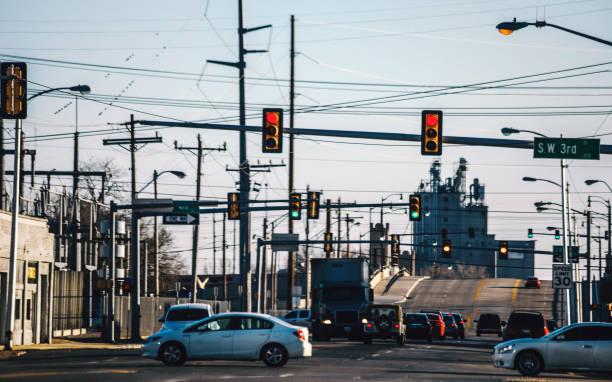
Intersections concentrate risk because vehicles, pedestrians, cyclists, and signals all converge within a small space. When a crash occurs at a red light or stop sign, fault is not always obvious in the moment. Investigators, insurers, and sometimes courts look at rules of the road, driver behavior, and physical evidence to understand what happened. Knowing how fault is assessed helps you drive more defensively and respond wisely if a collision occurs. It also prepares you to collect the right information at the scene and to communicate clearly with insurers during the claims process.
Right of Way Rules That Shape Fault
Fault analysis often starts with right of way. At signalized intersections, a solid red means a complete stop before the stop line and no entry into the crosswalk. A green signal grants permission to proceed but does not remove the duty to yield to pedestrians who already entered the crosswalk or to vehicles lawfully in the intersection. Yellow warns that red is coming, and entering late in the cycle can look like reckless behavior if a crash follows.
At stop signs, drivers must come to a full stop and yield to any traffic that is already in the intersection. At a four way stop, the first to stop is the first to go. If drivers stop at the same time, the vehicle on the right proceeds first. Left turns generally must yield to oncoming traffic unless a protected signal grants the turn. These default rules guide initial fault decisions and frame which party needed to yield.
Evidence That Establishes What Happened
Facts on the ground often decide fault. Investigators look for skid marks, final resting positions, and crush patterns to reconstruct direction and speed. Damage location can suggest who impacted whom and at what angle. Photos of the scene, debris fields, and signal locations provide context for sight lines and stopping distance.
Eyewitness accounts can fill in the timeline, especially if multiple neutral witnesses saw the signal phase or a rolling stop. Intersection cameras, dash cameras, and nearby business security systems sometimes capture the event. Police reports summarize statements, note citations, and record visible conditions like weather, lighting, and signage. Phone records may become relevant if distraction is suspected. In some cases, vehicle event data recorders help confirm speed and braking inputs just before impact. The more specific the evidence, the clearer the fault picture.
Red Lights and Stop Signs in Common Crash Scenarios
Certain patterns repeat at intersections. Rear end crashes at red lights often involve following too closely or inattention, especially when the lead vehicle stops for a changing signal. Left turn collisions at green without a protected arrow typically place responsibility on the turning driver for failing to yield, unless the oncoming driver was speeding or entered on a late red. T bone collisions in the middle of an intersection can indicate a red light violation or a stop sign roll through by the striking driver.
At stop signs, rolling through without a complete stop can place clear fault on the rolling driver if cross traffic had the right of way. Two-way stops crossing a major road create additional risk because drivers must judge closing speed and distance. If a driver pulls out and is struck by a vehicle that was plainly visible with adequate time to yield, fault usually follows the driver who entered unsafely. Pedestrian and cyclist rights matter as well. Drivers must yield to pedestrians in crosswalks and to cyclists proceeding with the same rights and duties as vehicles, which can influence fault when visibility is limited.
How Shared Fault and Comparative Negligence Work
Not every crash has a single at fault driver. Many states apply comparative negligence, which assigns percentages of responsibility to each party. A driver might run a red light, while the other party enters at excessive speed or while distracted. A pedestrian might step into a crosswalk against the signal, while a turning driver fails to scan fully before moving. These combinations can lead to shared fault, which affects how damages are calculated.
Insurance adjusters and juries consider whether each person acted as a reasonably careful person would in similar conditions. They weigh the visibility of signals, the timing of entries, the presence of obstructions, and the reasonableness of speed. If both parties made mistakes, recovery may be reduced by the percentage of fault assigned. Understanding this framework encourages careful driving and careful documentation, since small details can shift fault allocations.
Insurance Claims, Documentation, and When to Get Help
After an intersection crash, safety comes first. Move to a safe location if possible, call emergency services, and accept medical evaluation even if symptoms seem minor. Exchange information, photograph the scene, note signal positions, capture vehicle damage, and gather names and contact details for witnesses. If nearby cameras may have recorded the crash, politely ask businesses to preserve footage. Avoid speculative statements and do not admit fault at the scene. Provide factual descriptions to the responding officer and your insurer.
If injuries are significant or liability is disputed, consider professional guidance. For example, a car accident attorney in Long Beach can help evaluate intersection geometry, obtain signal timing data, secure camera footage, and work with reconstruction experts when needed. This support can be critical when the other driver challenges the signal phase, when multiple vehicles are involved, or when the insurer asserts comparative fault without a strong evidentiary basis.
Conclusion
Fault at intersections turns on right of way rules, credible evidence, and how each driver’s choices fit the standard of reasonable care. Red lights and stop signs create clear duties to stop and to yield, yet real world crashes often involve split second decisions, limited visibility, and conflicting accounts. By understanding how investigators analyze these cases and by collecting strong documentation at the scene, you improve your ability to navigate the claims process and protect your rights. Careful driving and thoughtful follow-up after a collision are the most reliable ways to reduce risk and resolve disputes fairly.