
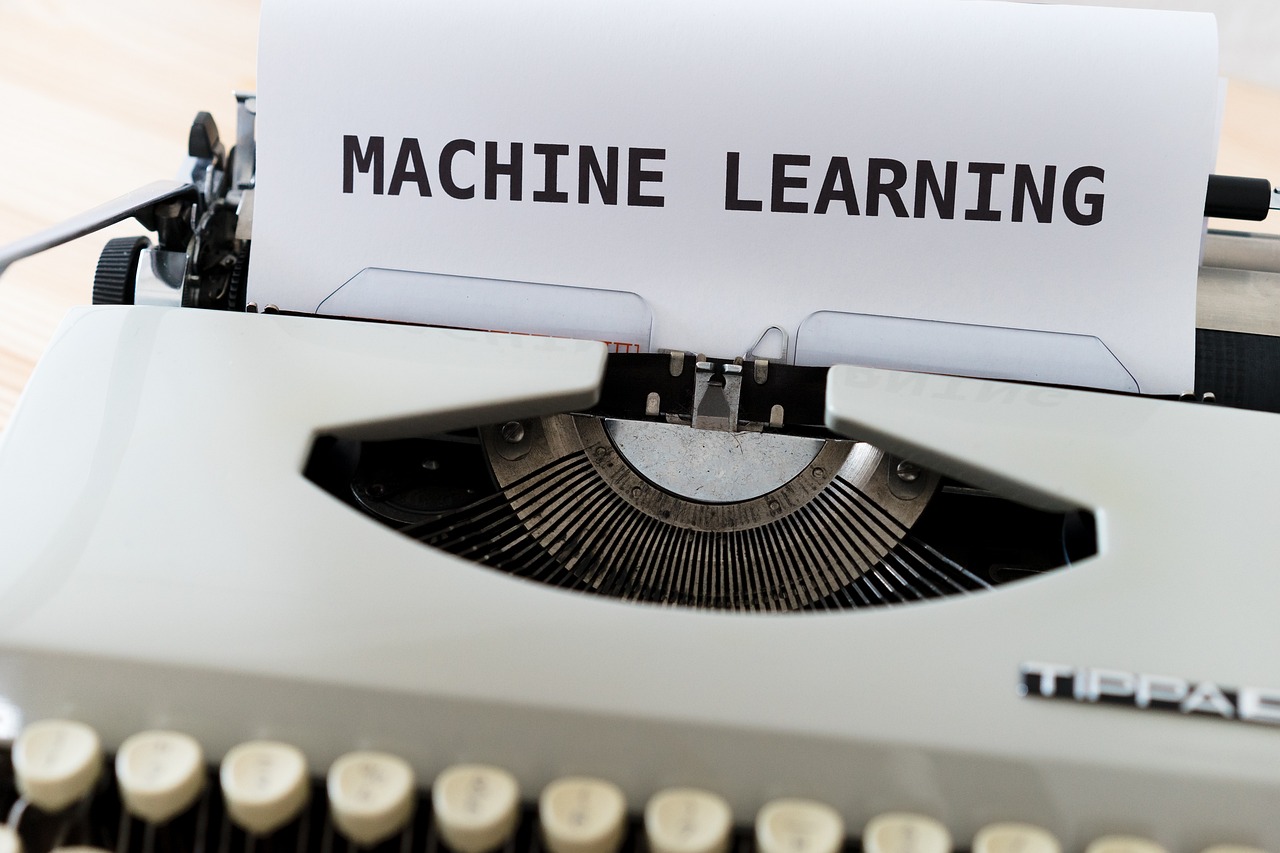
Machine learning (ML) continues to drive innovation across industries, from predictive analytics and natural language processing to autonomous vehicles and real-time recommendation systems. As ML models grow in complexity, choosing the right framework becomes critical for developers to streamline development, optimize performance, and scale intelligently.
In 2025, several machine learning frameworks stand out for their robustness, flexibility, and community support. Here’s a breakdown of the best machine learning frameworks developers should consider this year.
1. TensorFlow 3.x
Developer: Google
Best for: Production-ready deployment, deep learning, scalability
Why It Stands Out:
- Full support for Keras as a high-level API
- Optimized for edge and mobile deployment with TensorFlow Lite
- Tight integration with TPUs, GPUs, and cloud platforms (GCP)
- Supports TensorFlow Extended (TFX) for end-to-end ML pipelines
Ideal For: Enterprises, research institutions, and developers who need large-scale, production-grade models.
2. PyTorch 3.x
Developer: Meta AI
Best for: Research and rapid prototyping
Why It Stands Out:
- Dynamic computation graphs for intuitive debugging
- Widely adopted in academia and research labs
- Seamless integration with TorchServe, TorchScript, and ONNX
- Strong Pythonic design, gaining traction in production via TorchDeploy
Ideal For: Developers prioritizing flexibility, transparency, and cutting-edge research.
3. JAX
Developer: Google Research
Best for: High-performance computing, scientific research, auto-differentiation
Why It Stands Out:
- Built on NumPy syntax with accelerated performance
- Great for gradient-based optimization and research experiments
- Scales to TPU/GPU easily via XLA compilation
- Supports libraries like Flax (neural nets) and Optax (optimization)
Ideal For: Advanced ML developers and researchers working on differentiable programming and mathematical optimization.
4. Hugging Face Transformers
Developer: Hugging Face
Best for: Natural language processing (NLP)
Why It Stands Out:
- Access to over 100,000 pre-trained models (BERT, GPT, T5, etc.)
- Simple APIs for tokenization, training, fine-tuning
- Integrates easily with PyTorch and TensorFlow
- Expanding into Vision Transformers (ViT) and multimodal learning
Ideal For: Developers building chatbots, translators, summarizers, and any NLP-related application.
5. Scikit-Learn
Developer: Community-led
Best for: Classical machine learning
Why It Stands Out:
- Easy-to-use API for regression, classification, clustering, and preprocessing
- Highly compatible with NumPy, Pandas, and SciPy
- Ideal for small to medium-scale datasets and structured data
Ideal For: Beginners, data scientists, and those focusing on non-deep learning models.
6. Microsoft ONNX Runtime
Developer: Microsoft
Best for: Cross-platform model deployment
Why It Stands Out:
- Allows interoperability between frameworks (e.g., train in PyTorch, deploy with ONNX)
- Optimized for edge, mobile, and cloud
- Supports quantization, acceleration, and low-latency inference
Ideal For: Developers seeking framework-agnostic, high-performance deployment.
7. Fastai v3
Developer: Jeremy Howard and contributors
Best for: Quick prototyping and teaching
Why It Stands Out:
- Built on top of PyTorch for easier model training
- Designed for beginners and intermediate developers
- Strong support for transfer learning and pre-trained models
Ideal For: Learners, educators, and developers who want to build deep learning models quickly with minimal code.
8. Apache MXNet (v2)
Developer: Apache Software Foundation
Best for: Scalable deep learning with multi-language support
Why It Stands Out:
- Native support for Gluon API (imperative style)
- Efficient model parallelism and distributed training
- Compatible with languages like Python, Scala, C++, and Julia
Ideal For: Developers building cross-platform applications with multi-language support.
Choosing the Right Framework: Key Factors
| Criteria | Consider This |
|---|---|
| Rapid prototyping | PyTorch, Fastai |
| Large-scale production | TensorFlow, ONNX |
| NLP applications | Hugging Face Transformers |
| Classical ML models | Scikit-Learn |
| Scientific computing | JAX |
| Cross-framework deployment | ONNX Runtime |
| Ease of use | Fastai, Scikit-Learn |
Final Thoughts
The best machine learning framework in 2025 depends on your project goals, experience level, and deployment needs. Whether you’re building a language model, a recommendation engine, or a predictive analytics tool, the right framework can speed up development and enhance performance.
Stay up to date with the latest versions, leverage pre-trained models when possible, and join active communities to share and learn best practices.