

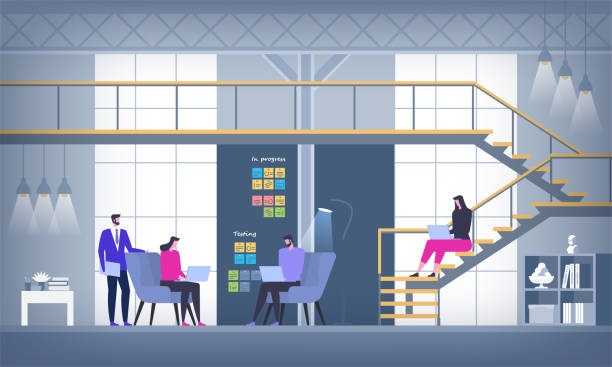
To be honest, work isn’t what it used to be. And that’s not necessarily a bad thing. Over the last few years, high-performing teams have started to look at their workspaces with a fresh set of eyes. Cubicles? Out. Fluorescent lights and grey carpets? No thanks. Clocking in and out just for the sake of it? That ship has sailed.
Today’s top teams want something different, something more human, more flexible, and more intentional. They’re not just turning up for a paycheck anymore; they’re showing up because they believe in the work, the people, and yes, the space they’re in.
So, how exactly are these high-performance teams rethinking the spaces where they collaborate, create, and innovate? Let’s unpack the shifts, the strategies, and the subtle details that are changing everything from productivity to culture.
The Workspace Isn’t Just a Place, But It’s a Tool
High-performing teams don’t see the office as just “somewhere to work.” It’s part of the team, a silent collaborator. When designed thoughtfully, a workspace can support deep focus, spark creativity, and bring people together in meaningful ways.
But here’s the thing: what works for one team may be a total disaster for another.
Some thrive in open-plan settings with lots of energy and buzz. Others need quiet nooks, acoustic privacy, or zones where they can retreat and think. The best workspaces aren’t just beautiful, they’re adaptable. They evolve with the team.
Goodbye One-Size-Fits-All, Hello Customisation
This is where good design starts to shine. And no, we’re not talking about trendy bean bags and ping pong tables. It’s about purpose-driven layouts that reflect how a team works. Where every corner, corridor, and meeting room are designed with real humans in mind, not just spreadsheets and floor plans.
Forward-thinking companies are working closely with expert office interior designers to craft bespoke solutions. These aren’t generic, off-the-shelf makeovers. They’re the result of understanding workflows, team dynamics, and what people need to do their best work.
Think of standing desks paired with sit-down lounges. Meeting rooms with walls you can write on. Focus booths for deep solo work. Relaxed spaces for creative thinking. And tech-enabled areas for hybrid calls that don’t make anyone feel like a pixelated afterthought.
The Rise of Hybrid and What It Means for the Office
One of the biggest shifts has been the move to hybrid work. And no, it’s not a fad. It’s here to stay. But it does come with new questions: If people aren’t in the office every day, what is the office for?
High-performance teams are flipping the old model. The office is no longer just a default setting. It’s now a destination, a place you go when it makes sense. For big meetings. For brainstorming. For bonding.
So, naturally, the space itself needs to reflect that. Less about rows of desks. More about collaborative zones, breakout areas, and flexible layouts that can change week to week depending on what the team needs.
Some companies are even downsizing their footprint and reinvesting in design. Instead of more square footage, they’re choosing smarter space.
And it’s not just about saving money; it’s about boosting energy. When a workspace feels purposeful, people notice. They want to be there. That matters.
1. Designing for Energy, Not Just Efficiency
Here’s a little secret high-performing teams have figured out: productivity isn’t just about hours spent. It’s about energy.
Ever walked into an office and just felt… drained? No windows, bad lighting, rows of lifeless desks. It’s enough to make anyone unproductive.
Great workspaces give energy back. Natural light. Plants. Colour. Comfortable seating. Clean air. The ability to move around. Even simple things like being able to see outside or change positions throughout the day can have a huge impact.
Designing for wellbeing isn’t a luxury anymore, it’s a necessity. And companies that understand this are seeing the difference in both morale and output.
Many are partnering with experienced office interior designers in Noida who know how to blend functionality with feeling. It’s not just about “looking modern”, it’s about feeling right. That subtle, human factor makes all the difference.
2. Culture Lives in the Details
Workspaces are storytelling tools. They say a lot about what a company values, often without saying a word.
A messy, outdated office might signal a company stuck in the past. A sleek but sterile one? Maybe it’s more style than substance. But a space that feels considered, warm, and tailored? That says we care about how you feel here.
High-performing teams pay attention to the details. Art that reflects the team’s identity. Local materials. Custom furniture. Signage that speaks like a person, not a robot. These things build culture. They make people feel like they belong.
And when people feel like they belong, they show up differently. More engaged. More collaborative. More themselves.
3. Tech-Ready Spaces, Without the Headaches
We can’t talk about modern workspaces without talking about tech. But let’s keep it simple, no one wants to fumble with cables, outdated projectors, or choppy Zoom calls.
High-performance teams are setting up plug-and-play spaces. Quiet zones for video calls. Conference rooms with seamless screen sharing. Charging points everywhere. Smart lighting that adjusts to the time of day. Soundproofing where it counts.
Tech shouldn’t be a barrier. It should be invisible but fully present. And again, that only happens with thoughtful design.
4. Bringing Everyone into the Conversation
Here’s something worth noting: the best-designed workspaces are rarely created in boardrooms alone. They’re built with input from the people who use them.
Surveys. Interviews. Casual chats. Observing how teams move, interact, and stumble throughout the day. It’s about listening. Testing. Tweaking. Making space for feedback.
This collaborative approach not only leads to better spaces but also builds trust. People feel heard. Respected. Invested.
And let’s be honest, no one wants to work in a place they had no say in designing. When teams are involved in shaping their environment, they take care of it. They’re proud of it.
The Office as an Evolving Space
The old model of “set it and forget it” doesn’t cut it anymore. High-performance teams are realising that workspace design isn’t a one-time project. It’s an ongoing conversation.
As teams grow, shift, and take on new challenges, their needs change too. So should the space around them. That might mean rearranging furniture, adding quiet zones, changing colour schemes, or even rethinking the entire layout.
Design is no longer about just making things look nice; it’s about helping people feel, think, and work better.
If you’re a business leader, office manager, or team lead, the question isn’t Should we rethink our workspace? It’s How soon can we start?
And if you want to do it right, bring in experts who don’t just design spaces but design with people in mind. Whether it’s experienced office interior designers in Noida or elsewhere, choose someone who understands that the best workspaces aren’t just built for productivity… they’re built for people.